Wednesday, May 25, 2011

Cold Springs Campground in Colorado's Flat Tops Wilderness

          We’re camped in the middle of an impressionist painting: mountain vistas fill the canvas, wildflowers jump from the meadows; a stream cascades down the hillside into a trout-filled pond.  The setting here is so magnificent and the scenery so grand that it hardly seems real.  But it is. 
Site #3 in Cold Springs Campground.
  Cold Springs Campground is located at the end of a long dirt road on the edge of the Flat Tops Wilderness in Colorado’s Routt National Forest; it might be the most gorgeous campground in the Rocky Mountain West.
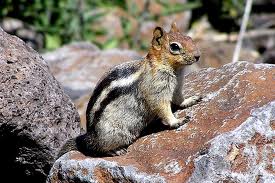
 
The Bagel Thief - a Golden Mantled Ground Squirrel.
  This evening we start a campfire before dark.  Tim fishes the small pond by our site while I try to protect our food from golden-mantled ground squirrels.
   In the morning we have bagels for breakfast and discover small bites taken from one of the bagels.  Despite my best efforts at defense those persistant little ground squirrels must have found their way into our food bag yesterday.
Along the Trail in the Flat Tops Wilderness.
  Today’s destination is Devil’s Causeway within the Flat Tops Wilderness, Colorado’s second largest wilderness area.  The Flat Tops offers alpine tundra and over 110 fish-filled lakes and ponds.  Along the trail to Devil’s Causeway we pass hundreds of downed trees - trees that had died during a bark beetle infestation in the 1940’s and have been falling and littering the forest floor ever since.  
  The trail breaks through the forest and climbs a long uphill stretch to an area above treeline.  We reach the causeway—a jumble of rocks 100 feet long and 3-4 feet wide crossing a deep bowl.  This is not the place for anyone with a fear of heights; the drop-offs on either side of the causeway are 800 and 1200 feet.  
  Tim crosses the causeway with no problem while I stay on one side and document his crossing with my camera.
  The sky fills with billowing thunderheads as we hike back to the campground.  Our last half mile is spent jogging through a downpour, thunder crashing and lightening flashing around us.  We’re wet and we’re cold; after waiting out the storm in the car it’s time to pack our things and roll up the soggy tent.  
  We vow to return someday to this magical place.  Shangri-La really does exist—it’s here in the mountains of northwest Colorado.
To learn more about the Flat Tops Wilderness area in Colorado’s Routt National Forest, visit these websites:


Tuesday, May 17, 2011

Llama Trekking with Rosebud Llamas Utah

             Llamas have been the helpful companions of humans for over 5000 years.  They are intelligent, curious and naturally gentle.  Llamas will carry all the food, kitchen gear, tents, sleeping bags and clothes for a two-night, three-day trip into the wilderness.
  Sounds good to us so Tim and I sign on for a llama trek into the San Rafael Swell of Eastern Utah with Shirley Weathers and Bill Walsh, owners of Rosebud Llamas Utah.  We meet Shirley and Bill at the trailhead and are introduced to the seven llamas who’ll carry our gear:  one female - Baez, and six males - Charlie, Chippo, Fasco, Fernando, Zorro and Yarrow.  After receiving a brief tutorial on the handling of llamas I take Fernando’s reins and Tim leads Charlie as we start on the trail.  Shirley and Bill’s German Shepherd, Danke, accompanies us as well.

Contented Llamas in Camp.
          The trail is a three-mile journey through geologic time - we hike past enormous rock walls, arches and pinnacles.  Formations in the Swell span the Permian through the Cretaceous periods.  
  We stop under giant cottonwoods for lunch and Shirley ties the llamas to the trees where they noisily munch all the vegetation they can find, including bark.  We establish camp in a valley by the San Rafael River.  While Tim and I set up our tent Shirley and Bill unload the packs, erect our kitchen tent, dig a fire pit and stake the llamas to a picket line.  It’s a peaceful scene - llamas grazing and dinner cooking under a bright blue sky in the shadows of brilliant red rocks.  We enjoy a delicious dinner of tortellini with meat sauce and then Tim and Bill collect wood and start a campfire in our small fire ring.  We’re all alone in the wilderness.  
  By nightfall the sky is illuminated with millions of stars; the milky way stretches across the galaxy.   A splendid night in the desert.
  The first day of October and it’s a chilly morning.  We don down vests to sip our coffee and tea as sunlight creeps over the rocks and into the valley.
  After breakfast Tim, Bill and I load our day packs for a hike along Spring Canyon to view a natural arch.  We slog through marshes and high weeds - it’s slow going and not what we were expecting in the desert but now we understand how Spring Canyon earned its name.  Tim, Bill and I eat lunch along the trail and then return to our campsite.  As we near camp Danke prances toward us; Shirley is tending the llamas.
   
          Tim and I drop our packs, remove our hiking boots and relax on camp chairs in the shade.  The llamas are relaxing too, lying in the tall grass and humming contentedly.  Our llamas are the camp’s seven yoga masters - each rumbling their low, resonant mantras.  Soothing and serene.
  Shirley cooks chicken curry for dinner, another satisfying meal.  This evening we sit around a blazing campfire and regale each other with travel tales --- and a few scary camp stories as well.  As if in response to our spooky stories we’re treated to the sounds of wildlife tonight -  great-horned and western screech owls hooting, coyotes yipping.
Our Wilderness Campsite in the San Rafael Swell.
  Our final morning in the Swell.  Shirley boils water for coffee and tea, then we gather round the kitchen table, enjoying our morning drinks while exchanging additional travel yarns.
  After breakfast it’s time to break camp and hike out of the canyon.  Tim and I pack our bags while Shirley and Bill load the panniers and strap them onto the llamas’ backs.  Tim and I lead Charlie and Fernando; we soon fall into an easy rhythm on the trail and I feel I’m forming a bond with Fernando.

Packing the llamas for the hike back to the trailhead.

          We return to the trailhead, say our goodbyes to Shirley and Bill and thank them for a pleasant first introduction to llama trekking.  Finally, the time has come to say goodbye to Charlie, Fernando and the rest of the llamas:  “Thanks guys - for shouldering the load on this terrific trek.” 

Note:  Fed up with rampant oil and gas development occurring near their town (and all over Eastern Utah) Shirley and Bill recently moved to Oregon.  Therefore these Llama treks are no longer available.


To hear the call of the Western Screech Owl, listen here:  http://www.owling.com/screech2a.wav
If you would like to read about wilderness areas in the San Rafael Swell:  http://www.utah.com/playgrounds/san_rafael_wsa.htm

Tuesday, May 10, 2011

Charleston, West Virginia - Part II

         West Virginia’s state capitol building is considered one of the most beautiful in the United States.  The Capitol complex faces the Kanawha River.  Mature cherry, hickory and oak trees surround the building; sunlight reflects off the glistening gold dome.  
West Virginia's State Capitol
The capitol is hosting a wedding today and pre-wedding festivities are underway.  Young women in coral bridesmaids dresses dash across the marble floor. Young men in tuxedos stand in groups, casting anxious looks over their shoulders.
         I snap a few photos of the wedding party, then arrive at the information desk for a personal tour of the capitol.  My guide, Caroline, points out the gleaming marble in the building—Italian marble in the House Chambers, red marble from Tennessee lining the walls of the west wing, white marble from Vermont on the floors.   A two-ton crystal chandelier hangs from the center dome.  I can see why someone would want to celebrate a wedding here.  
A capital spot for a wedding.

  The wedding ceremony is over as my tour finishes; wedding guests are in line for hors d’oeuvres.  The tuxedoed young men—no longer nervous—laugh and give each other pats on the back.  The young women —visibly relieved—smooth their dresses and fix their hair.  Caroline tells me that anyone who wishes to may celebrate their nuptials here; each year the state capitol hosts more weddings than the year before.  I wonder—are other state capitol buildings open for weddings?
  I return to the Brass Pineapple and relax in my room before changing clothes for dinner at Laury’s restaurant.  On the way to the restaurant I stop at Taylor Books on Capitol Street and arrive as the four women from my Bed and Breakfast are leaving.  “Hey”, I call, “It’s the Moms!”  They wave and thank me for telling them about the bookstore, say they loved it.  And I love it too.  I spend over an hour in Taylor Bookstore, drinking a s’mores latte, browsing through the books, the pottery displays and the art shop.  
  It’s time to cross the Kanawha river for dinner.  Laury’s Restaurant, housed in the former C&O rail depot, boasts impressive river views and an elegant interior.  Chandeliers hang from the ceiling; cream and burgundy-banded silk draperies adorn the giant windows.  I sip a glass of South African white wine while savoring the crab-stuffed salmon entree.  For dessert I enjoy creme caramel and coffee.  The coffee is accompanied by a tray bearing cinnamon sticks, mini chocolate chips, real whipped cream, cream and sugar.  I add a bit of each of these offerings to my mug. 
Laury’s serves the perfect ingredients for a delightful dinner—welcoming atmosphere, attentive but non-intrusive wait staff, and delicious food.
  Fully satisfied I return to the Brass Pineapple and take a seat on the porch.  The setting sun casts its light on the mighty oak—its leaves shudder in the soft evening breeze.   It’s been a good day in West Virginia’s capital city.
For information on West Virginia’s State Capitol go to:  http://www.wvculture.org/agency/capitol.html
When in Charleston, you’ll want to visit Taylor Books: http://www.taylorbooks.com/
and you'll certainly want to dine at Laury's Restaurant:  http://whycharlestonwv.com/restaurants-in-charleston/laurys-restaurant/

Thursday, May 5, 2011

Charleston, West Virginia - Part I

         Charleston’s East End Historic District has the look and feel of a graceful southern city.  I’m staying in The Brass Pineapple Bed and Breakfast - a Victorian home near the West Virginia State Capitol.  A towering oak tree graces the inn’s front entrance; carved woodwork and stained-glass windows adorn the rooms inside.  My room, the Bauer Room, is named for the home’s original builder; the first thing I notice is an oversized wooden bed topped with pillows and comforters.  It’s late and that soft, deep mattress is calling....
Ahhh, a good night’s sleep in a cozy bed.  Coffee, tea and pastries greet me in the dining room on this blue-sky morning.  I pour a mug of coffee, venture to the porch and listen to birds singing from the great oak.   After a few minutes I return to the dining room where the B&B’s host, Steve, serves a hearty breakfast of eggs, bacon, shortcake and fruit.

         I’m halfway through breakfast when I hear voices on the stairway.  A few seconds later four women appear.  They’re all wearing pink T-shirts with a message silk-screened on the back: “4th Annual Mom’s Weekend Away to Wild, Wonderful West Virginia at the Brass Pineapple B&B in Charleston.  Every May since 2007.”  On the front of their T-shirts is this passage:  “The heartfelt counsel of a friend is as sweet as perfume.”  Proverbs 27:9
Oak-shaded Brass Pineapple B&B.
  Who are these women?  I’m about to find out.  Melinda, an ordained Presbyterian Minister; Amy, a Pharmacist; Kim, a Human Resources Director; and Becky, a former counselor of education who now stocks cards for Hallmark, met 11 years ago in Raleigh, North Carolina through “Mommie’s and More” - a support group for first-time mothers.  They had all taken breaks from their careers for motherhood, and to cope with the changes in their lives and the emotions they were feeling these new mothers joined the support group and became fast friends.  Four years ago Amy moved to Cincinnati and the women decided to hold annual gatherings as a way to keep in touch.  
  We chat and I learn that the Moms are all avid readers.  I tell them of my plan to write a travel book someday and to visit Taylor Bookstore in downtown Charleston today.    
         It was nice meeting the Mom’s and as I leave breakfast I tell them to look for their names in my travel memoir.
  What to do next?  I decide to walk a half block to the State Capitol Complex.  My first destination is the West Virginia Cultural Center and State Museum.  The museum’s theme is a walk through West Virginia’s history; the journey starts in prehistoric forests, then winds its way through the Civil War, railroads, industrialization and paved highways before terminating on the information superhighway of the internet age.  I learned a few things from the museum’s impressive displays.  For example:  Did you know that West Virginia (then considered Western Virginia, a part of Old Virginia) was the most divided in loyalties of any “state” in the Civil War?  Over 50,000 soldiers fought for Western Virginia - 20,000 for the Confederacy and 30,000 for the Union.  West Virginia became the official 35th state after the Civil War.
  Leaving the museum, I notice a crowd gathering around the War Memorials and wander over to see what’s going on.  A group of veterans is gathered to celebrate the first annual Veteran’s Remembrance Day.  The vets intend to use this annual event to speak about veteran’s issues with their state and federal government representatives.  A noble cause.  Many of the veterans are dressed in suits and ties but one group is attired in motorcycle-gang garb - the Vietnam vets, obviously.  While the vets are speaking I admire the memorials; inscribed on their surfaces are the names of West Virginia’s servicemen killed in WWI, WWII, Korea and Vietnam.  The story is still being written on Iraq and Afghanistan.

If you would like to visit the Brass Pineapple, check out this website:  http://www.brasspineapple.com/Brass_Pineapple/Welcome.html

For more information on Charleston, West Virginia travel:   http://travel.yahoo.com/p-travelguide-480309-charleston_vacations-i

Tuesday, April 26, 2011

Photos from Yosemite

I'm on vacation this week.  Enjoy these pictures from Yosemite.
Click on photo to enlarge.
Climber Camps on El Capitan at Night.
Tanaya Lake


El Capitan in the Fog.

View of Half Dome and Nevada Falls.
Bridalveil Falls

Wednesday, April 20, 2011

California Condor #57 in Zion National Park, Utah

  The California Condor population steadily declined during the 20th century until, in 1987, there were only 22 California condors known to exist in the world.  The last of the free-flying condors were taken into captivity in that year and a captive breeding program was initiated.  Reintroduction into the wild began in early 1992 and continues today.  In 1996 several pairs of breeding condors were released into the wild in Arizona, 30 miles north of Grand Canyon National Park.  Since that time the condors have spread into southern Utah; 70 condors currently soar over the skies of northern Arizona and southern Utah.
*****
Climbing to the top of Angel's Landing.
  It’s a sun-drenched October morning in Zion National Park.  Tim and I catch the shuttle into the park for today’s hike to Angels Landing.  The Angels Landing trail is strenuous and grueling.  The hike is described in the Zion National Guidebook as follows:  “The hike starts along a gradually ascending path by the Virgin River then starts up a series of steepening switchbacks.  There is a small brook through Refrigerator Canyon, a cool, shady mostly level walk under tall Ponderosa Pines.  From Refrigerator Canyon the trail climbs the impressive Walter’s Wiggles, a series of steep and short switchbacks.  After Walter’s Wiggles you reach Scout’s Landing at 2.0 miles, a wide, sandy lookout.  From Scouts Landing the trail makes a final steep 0.5 mile ascent to Angel’s Landing, 1500 feet above the valley floor.  The last half mile requires a 45 minute effort of steep climbing on ridgelines, aided by chains anchored in the rock.  From Angel’s Landing there is a 360˚ view of Zion Canyon.”
  We arrive at trail’s end and, as promised by the guidebook, are treated to a top-of-the-world view.  What could surpass this?  How about the sight of a critically endangered California condor?  Other hikers atop Angel’s Landing point out the huge bird, perched on top of a nearby ponderosa pine.  As we relax and settle down on the rocky outcrop with our lunch the condor takes flight, flapping and soaring above us.  We can see a white tag on his wing identifying him as “Condor 57”.  The magnificent bird completes six circles over Angel’s Landing.  The shadow of his nine-foot wingspan falls on the precipitous rock face before he disappears over the cliffs on the canyon’s western edge. 
Condor 57 Soars over Angel's Landing.
  The hike down from the top of Angel’s Landing to the trailhead is hard on the knees but we’re so exhilarated by our condor experience that we barely notice.  When we return to the visitor center I report the condor sighting to the ranger and he asks me to fill out a form providing details.  Later I look up Condor 57 on the internet and discover that our bird is a male, born in captivity on May 20, 2001 and released in Vermillion Cliffs, Arizona on September 25, 2002. 

  Welcome home, Condor 57.  May you enjoy a long and productive life. 


For more information on California Condor reintroduction go to:  http://www.nps.gov/grca/naturescience/condor-re-introduction.htm

Information on Zion's National Park and the Angel's Landing trail may be found here: http://www.nps.gov/zion/index.htm  and  http://www.zionnational-park.com/zion-angels-landing-trail.htm

Friday, April 15, 2011

Moose Encounter in Rocky Mountain National Park

         Alces alces: The North American Moose 
         These magnificent mammals project the image of goofy, gentle giants.  They are also strict vegetarians, reinforcing their affable appearance.  But a few sinister personality traits lurk beneath the surface of these seemingly benign creatures: moose can be ill-tempered; moose can attack without provocation; moose can kill. 

         Tim and I are camped in Long Draw Campground in Northern Colorado.  This evening we take a drive to the south end of Long Draw Reservoir where Tim will fish a river inside the northern boundary of Rocky Mountain National Park.  We cross a bridge and walk a quarter mile along a gravel pedestrian path by the water.  Tim strings his fly rod and wades into the river while I sit on the path with my book.  After a few minutes I get up to stretch and survey my surroundings.  

         We’re in a stunning setting at 10,175 ft. elevation.  Lofty peaks reach for the sky and surround boggy, willow-filled meadows.  As I scan the river and meadows I say to Tim:  “Looks like there should be a moose in this meadow somewhere.”  
A few seconds later I look up and there he is—a huge bull moose ambling along the path toward us.  A wild animal’s normal inclination is to avoid humans and this moose is still far away, so I alert the moose to our presence by yelling: “Hey Mr. Moose.  It’s us—humans—turn around now!”  The bull keeps coming, eyeing us and lifting his head high into the air.  By ignoring my frantic message our moose declares he has no fear of us—or of anything else.
  After a few more steps in our direction Mr. Moose ducks into the side meadow about 100 yards away.  I’m relieved.  While browsing the willows the moose keeps his eye on us, then moves closer.  I’m worried.  If our bull is having a bad day I have no intention of being a part of it.  Tim and I decide to leave this spot.  We turn around and walk back toward the bridge, then settle down on the other side of a small crest in the path—now we can’t see the moose and he can’t see us.  Tim fishes this section of stream and soon hooks a nice cutthroat trout.  I settle in again with my book, peace restored.  
  Until....  the sound of something crashing through the willows reaches my ears over the din of the water.  I stand up and peak over the hill, looking back to the spot where we had encountered the moose earlier.  The big bull is now running through the meadow directly toward us.  I voice my concern to Tim, pick up my pack, walk briskly to the bridge and cross to the other side of the river.  After crossing the bridge I look back and don’t see the moose.  I do see Tim; he had rushed across the river and scurried up the steep bank on my side.  Tim shouts to me:  “The moose watched me as I climbed out of the water, but then he turned around.  I think he’s gone now.” 
  Tim returns to the river and I pick up my binoculars to scan the hillside.  I no longer see the moose; instead I notice a large herd of elk resting and browsing high on the mountain.  I relax.  
         Until.....  the familiar thrashing and crashing through the willows.  This time Mr. Moose is heading for the river.  He watches me as he eases down the bank and enters the water directly in front of me.  If he crosses the river and starts climbing the bank toward me I’m in trouble.  I look for the nearest tree to climb.  But no—he quenches his thirst with a long drink, then turns around and lopes into the hills.  Another half hour passes; he’s finally gone for the evening.  
  Perhaps Mr. Moose didn’t mean to threaten and frighten us.  Perhaps all he really wanted was a drink—and Tim and I were standing in his way.  We’ll never know.
  Back at the campsite later that night we build a fire and enjoy hot cocoa under the stars, thrilled that our moose encounter ended happily, thrilled that moose still thrive in this part of the world.


Bull Moose Quenching Their Thirst -
photo by Glen Hush for National Geographic.
Interested in a visit to Rocky Mountain National Park?  Look here:
http://rockymountainnationalpark.com/
http://www.nps.gov/romo/index.htm